







Road Trip Frequency & Demographics
Road trips aren’t just popular, they’re part of everyday life.
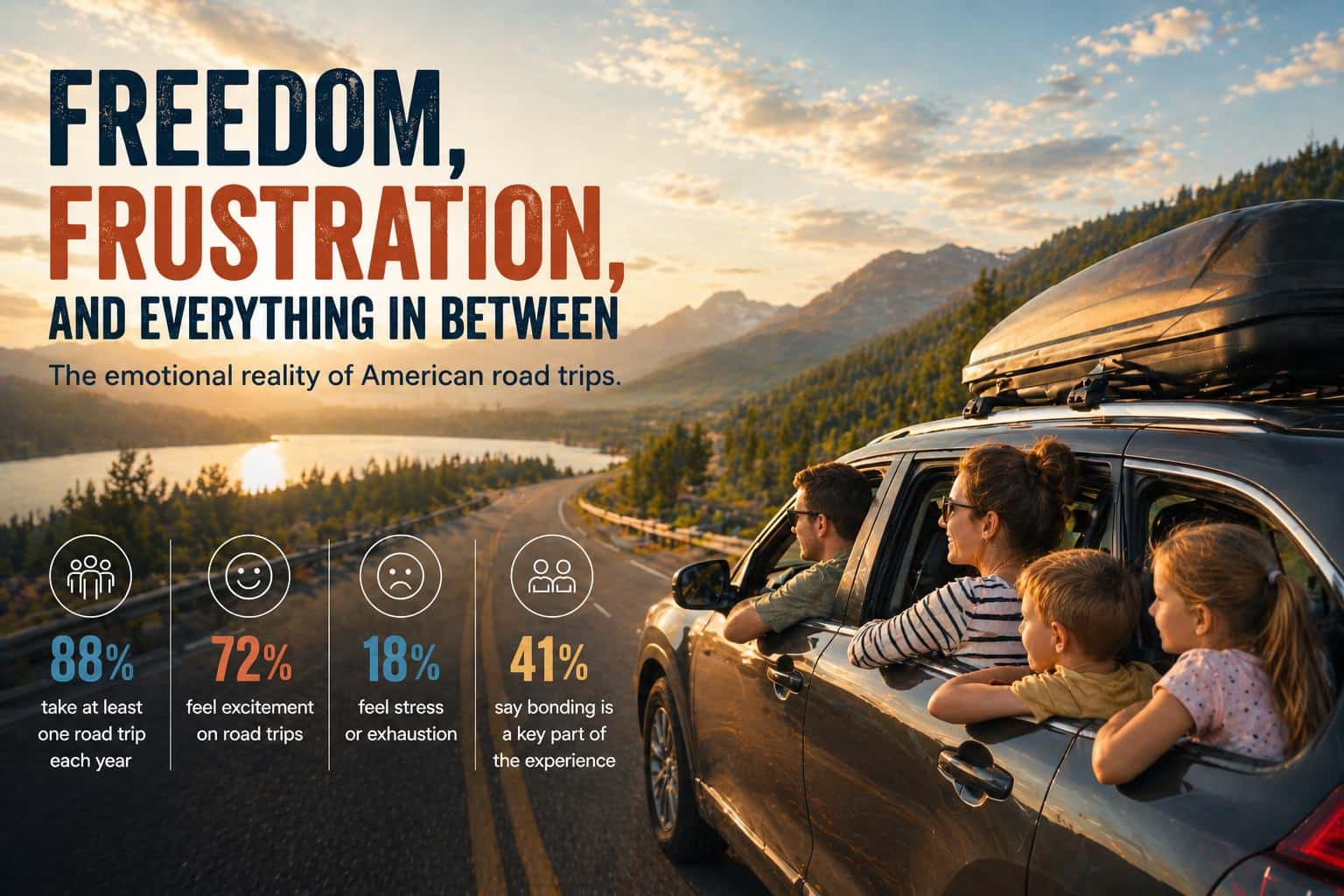
Nearly 88% of drivers take at least one road trip each year. For many, it’s not a rare occasion either. Roughly 4 in 10 people hit the road once or twice a year, while another 30% travel even more frequently.
What stands out most isn’t just how common road trips are, but how evenly that behavior is shared. Across ages and genders, participation looks almost identical.
But while participation is nearly universal, the emotional experience is not.
“Travel surveys consistently show that road trips are one of the most accessible and widely preferred forms of travel across demographic groups,” based on data from Pew Research Center and U.S. Travel Association.
Road Trips Are an Emotional Experience
For most Americans, road trips are defined by positive emotions.
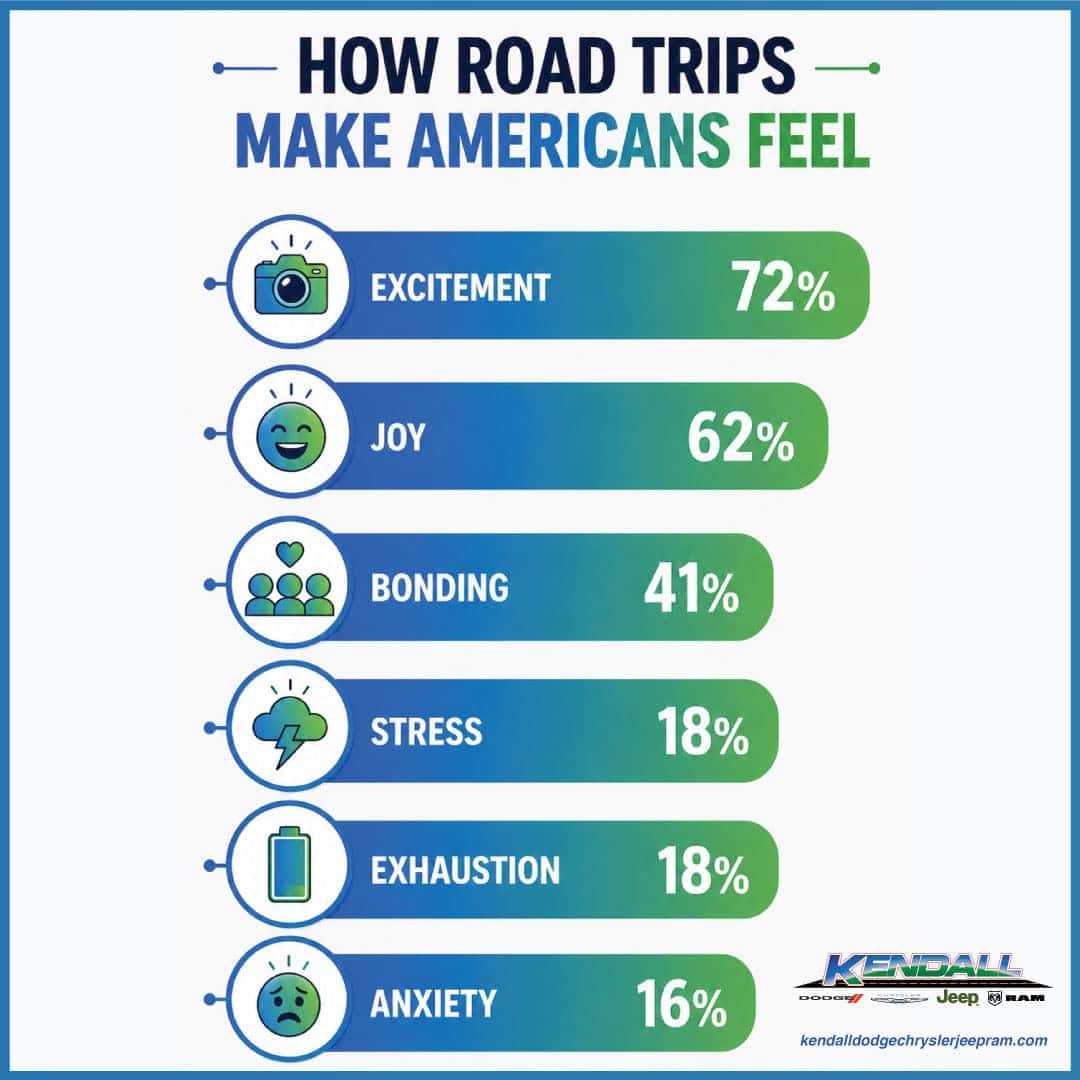
A strong majority associate them with excitement (72%) and joy (62%), and 41% associate them with bonding as a defining part of the experience.
These numbers reinforce the cultural image of the open road as something people genuinely look forward to.
But that’s only part of the story.
A smaller but still meaningful, group describes a very different emotional layer. Around 18% report feeling stress or exhaustion, and 16% say anxiety is part of the experience.
What’s striking is that these opposing feelings don’t cancel each other out.
They coexist.
A road trip can feel exciting at the start, frustrating in traffic, calming during a scenic stretch, and exhausting by the end; sometimes all in a single day.
The road trip experience isn’t one emotion, it’s a sequence of them.
What Makes Road Trips Feel Therapeutic
Even with moments of stress, many drivers still describe road trips as restorative.
That feeling tends to come from a mix of emotional and practical factors. For some, it’s the ability to break away from routine, something 72% of respondents pointed to. For others, it’s the time spent with loved ones, with over half (56%) citing family bonding as a key benefit.
Top Road Trip Stressors
If road trips feel therapeutic, why do they also feel stressful?
The answer lies in what drivers can’t control.
For many, stress starts with traffic. In fact, just over half of respondents (52%) identified it as their biggest pain point. Costs follow closely behind, with 37% pointing to gas and food expenses, while concerns around safety (28%) and planning (27%) add another layer of pressure.
Even smaller factors, like vehicle reliability (24%) or time constraints (22%), begin to stack up over the course of a trip.
And for parents, the complexity increases even further, with 15.4% noting that traveling with children adds to the stress.
 ";
";
“One of the most underestimated stressors is the anticipated challenges of a road trip, like excessive traffic or children fighting in the car while you’re the driver trying to resolve these problems. Traveling with children is both meaningful and demanding. It creates opportunities for connection, but it also requires parents to model patience, flexibility and problem-solving in real time.”
Typical Trip Distance & Duration
While emotions vary, behavior is surprisingly consistent.
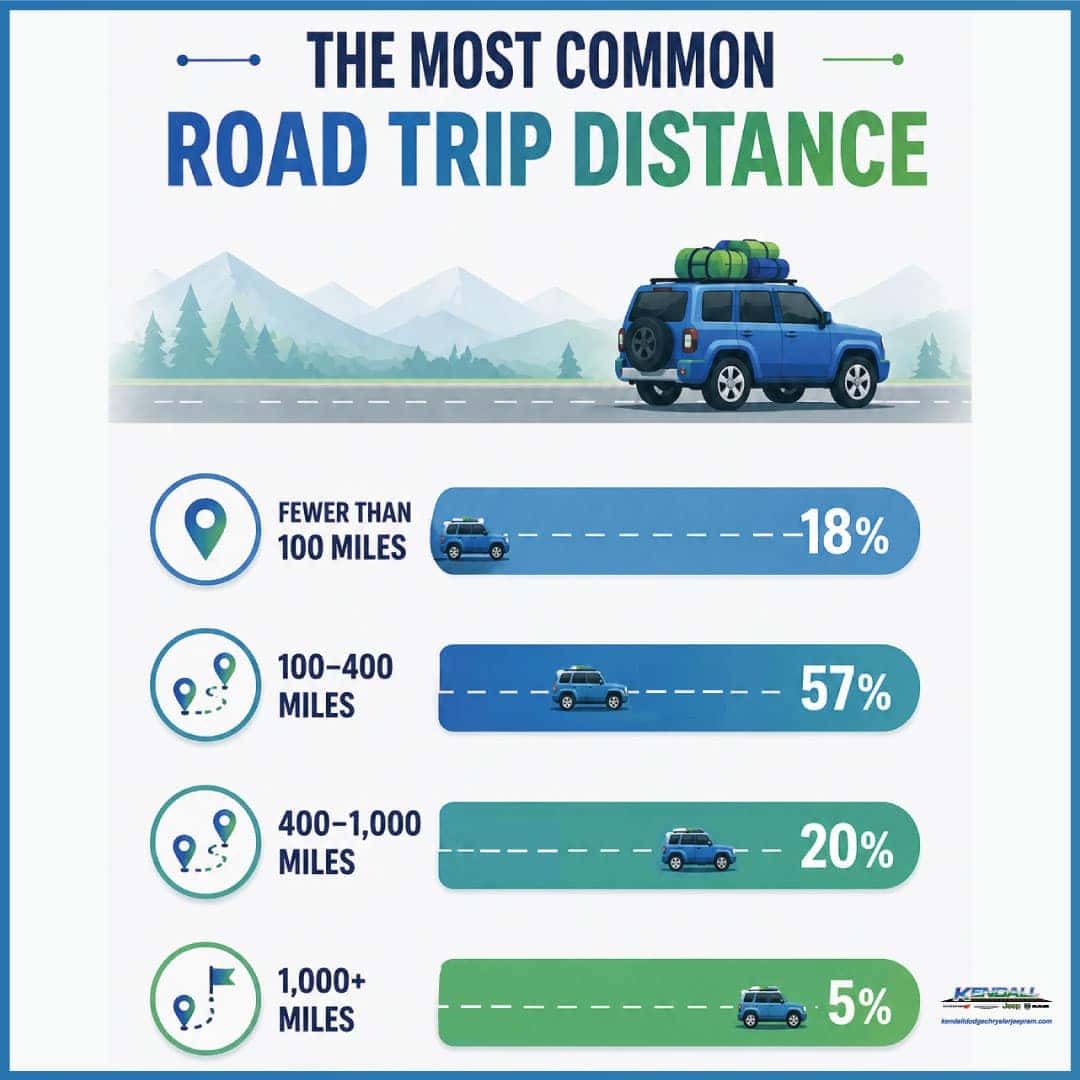
Most road trips tend to fall within a comfortable middle ground. In fact, 57% of trips land between 100–400 miles, with 45% lasting just a few hours (2–5 hours) and another 30% stretching into a longer day of driving.
This pattern holds steady regardless of who people are traveling with.
It suggests that most drivers are instinctively choosing trips that feel like a real escape, but still manageable. Long enough to feel different, short enough to stay enjoyable.
Travel Companions & Group Dynamics
The emotional tone of a road trip often depends on who’s in the car.
Families, for example, tend to keep things practical, with a majority (56%) staying within mid-range distances rather than pushing into longer trips. Friend groups lean even more heavily toward shorter getaways, with 65% in that same range
Couples show more flexibility, balancing between shorter and longer drives, while solo travelers stand out for their willingness to go farther–with 26% taking road trips longer than 400 miles and 10% over 1,000.
Across all groups, a clear pattern emerges: the more people involved, the more structured the trip becomes. The fewer people involved, the more flexible, and often longer, it gets.
Scenic vs. Efficient Trips
How drivers choose their route reveals how they approach the journey itself.
Some prioritize the experience, opting for scenic routes, something 35% of drivers say they actively choose. These travelers are more likely to stop often, take their time, and treat the drive as part of the trip.
Others focus on efficiency. About 27% choose the fastest route, while a similar share aim to avoid traffic altogether. These drivers tend to minimize stops and push through longer stretches.
Even so, most people fall into a natural rhythm, with just over half (52%) stopping every 1–3 hours.
Route choice isn’t just navigation, it reflects mindset.
Audio Preferences
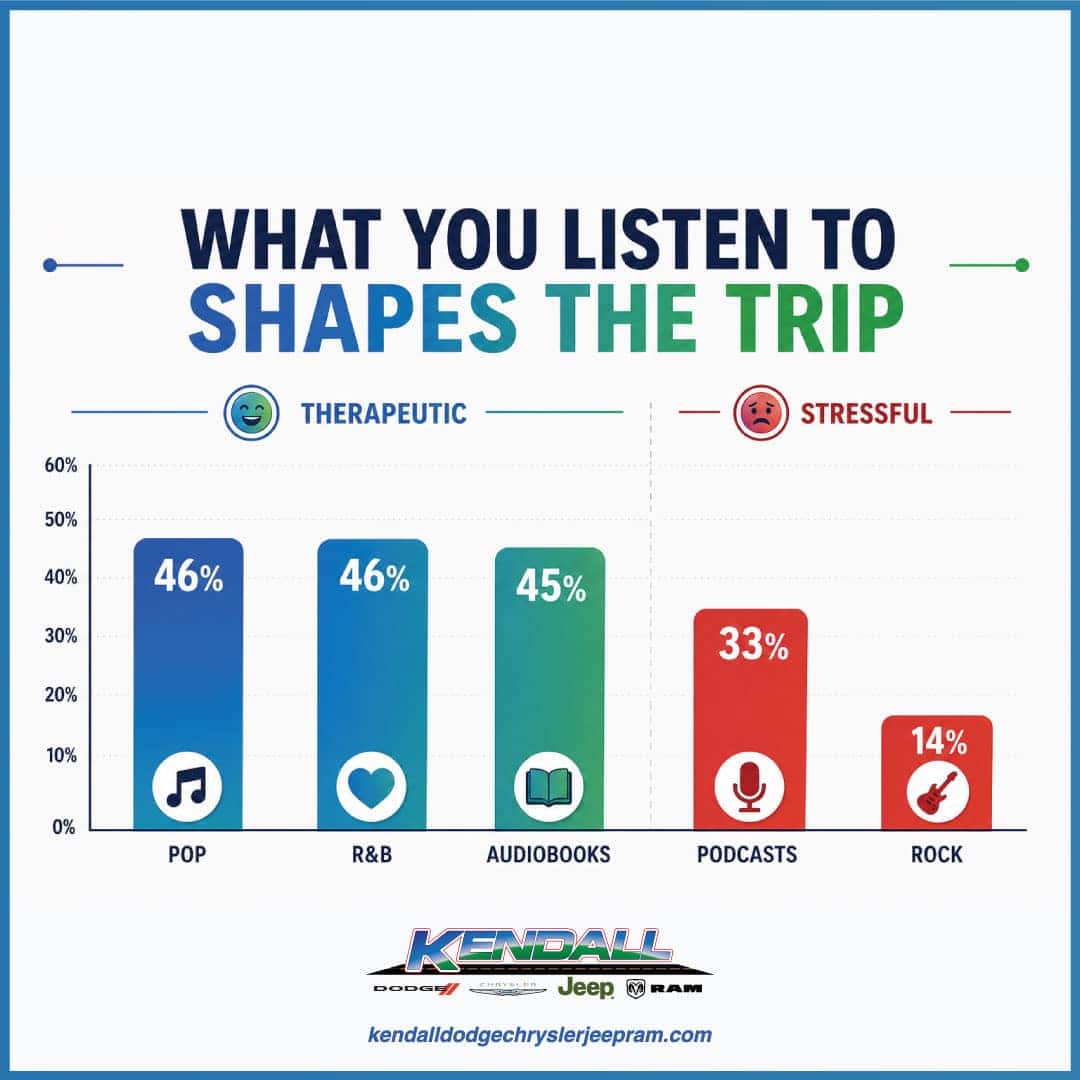
What you listen to on the road can quietly shape how the trip feels.
Stopping Behavior & Travel Patterns
Stopping patterns reveal how people move through their trips.
Most drivers settle into a steady rhythm, with 52% stopping every 1–3 hours. These breaks are rarely optional, they’re largely driven by basic needs like bathroom stops, food, and fuel, each cited by roughly 80% of respondents.
But behavior shifts depending on age.
Older drivers are significantly more likely to stop frequently, accounting for 68% of frequent stoppers, compared to just 32% among younger drivers (18–24). The difference suggests a stronger preference for comfort and pacing over efficiency.
Family Travel
For parents, road trips involve more than just getting from point A to point B.
Nearly half travel with one or two children, and that alone changes the dynamic. Trips require more planning, more frequent stops, and greater attention to timing.
In fact, 85% of road trippers plan their trips in advance, a number that becomes even more relevant for families managing multiple needs at once.
 ";
";
“Close quarters on road trips tend to amplify sibling conflict, but they also create powerful opportunities for kids to practice communication, patience, and problem-solving—with a little guidance from parents. Kids don’t make road trips easier—but they often make them richer, louder, and far more memorable than we expect.”
Fast Food & Dining Trends
Road trips aren’t just about the destination, they’re about the stops along the way.
And when it comes to food, Americans tend to rely on what’s familiar.
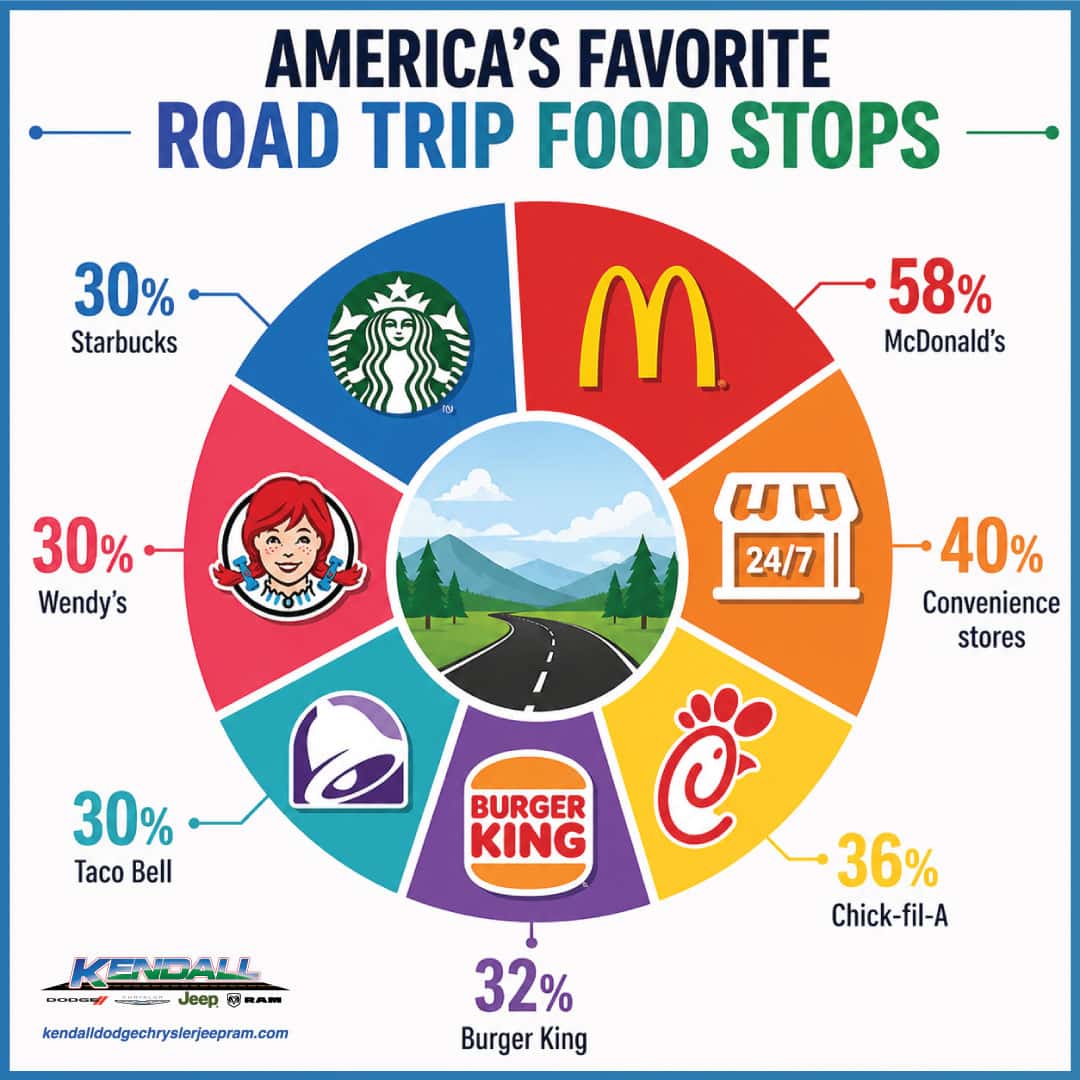
Further down, options like Subway, Dunkin’, KFC, and Arby’s still play a role, though with smaller shares. And notably, only 7% of drivers say they don’t typically stop for fast food at all.
Convenience vs. Cravings
At first glance, these stops may seem like simple preferences.
But they reveal something deeper about how Americans approach road trips.
Chains like McDonald’s dominate not just because of taste, but because of predictability. When you’re on the road, familiarity reduces friction; you know what you’re getting, how long it will take, and where to find it.
At the same time, the high share of convenience store stops highlights a different priority: efficiency. For many travelers, the goal isn’t to sit down and eat–it’s to refuel quickly and keep moving.
Even service plazas play into this mindset, offering multiple options in one place and reducing the need to make decisions.
Road trip food choices aren’t just about what people want, they’re about what feels easiest at the moment.
These decisions don’t just affect convenience, they shape how the trip feels. Stopping for food, coffee, or a quick break can create moments of relief, break up long stretches of driving, and even become something to look forward to. But they can also add time, cost, and complexity; especially when traveling with others. Like everything else on a road trip, even small choices carry emotional weight.
Are Road Trips Stressful or Therapeutic?
The answer isn’t one or the other–it’s both, at the same time.
On one hand, the emotional upside is clear: 72% of drivers feel excitement, and 62% feel joy when hitting the road. On the other, the practical challenges are unavoidable. Traffic (52%) and cost (37%) remain persistent stressors.
But that tension is exactly the point.
Road trips blend escape with effort, freedom with friction. They ask for patience, but reward it with moments you don’t get any other way.
That’s what makes them different: the stress doesn’t cancel out the joy, it amplifies it.
Why Americans Keep Road Tripping
Road trips aren’t popular because they’re perfect, they’re popular despite their imperfections.
While a majority of drivers report positive emotions like excitement and joy,, the experience isn’t without challenges. Many also point to stressors like traffic (52%) and cost (37%), highlighting the tradeoffs that come with hitting the road.
Even so, 88% of Americans continue to take road trips year after year.
That consistency suggests something deeper than convenience. Road trips deliver a net-positive experience, one where the emotional payoff outweighs the logistical friction.
In a travel landscape often defined by rigid schedules and planning, road trips stand out for their flexibility. They offer a sense of control and spontaneity, even when the journey doesn’t go perfectly.