






What Makes Old Chrysler Cars So Special?
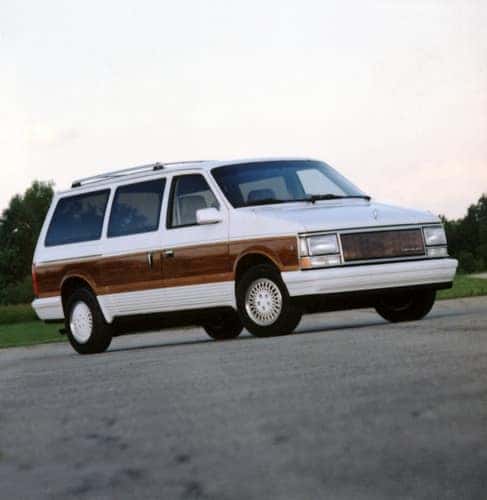
Photo Source/Copyright: Stellantis
When you look back at Chrysler’s footprint on American roads, it wasn’t just building cars; it was setting benchmarks for luxury, muscle, and family transit. While some nameplates spanned decades, others redefined entire market segments overnight.
The Icons, Chronologically
- Imperial (1926–1993): Chrysler’s flagship line eventually became its own standalone luxury brand. It was also a tech pioneer, introducing the industry’s first all-transistor car radio.
- Windsor (1939–1961): The dependable postwar volume leader slotted right beneath the top-line New Yorker.
- New Yorker (1940–1996): Chrysler’s longest-running badge, grinding out over 50 continuous years of production and outlasting almost all of its direct rivals.
- Town & Country (1941–2016): Started life as an unmistakable wood-bodied wagon before evolving decades later into the benchmark American minivan.
- Chrysler 300 (1955–1965, 2005–2023): Launched the early muscle era with the letter series, putting a 300-horsepower, 331-cubic-inch FirePower HEMI inside an unornamented body, before returning as a modern rear-drive performance sedan.
- Newport (1961–1981): The accessible full-size workhorse offered as a sedan, hardtop, convertible, or wagon.
- Cordoba (1975–1983): The personal-luxury coupe (famously pitched by Ricardo Montalbán) that anchored the brand through heavy downsizing years.
- LeBaron (1977–1995): The convertible hit that brought drop-top driving back to showrooms at an accessible price.
- Concorde (1993–2004): An aerodynamic flagship that used cab-forward design to push the wheels out to the corners, freeing up interior space rivals couldn’t touch.
- Pacifica (2017–present): Built in Windsor, Ontario, this current flagship keeps Chrysler’s minivan legacy alive with a 287-horsepower 3.6-liter V-6, available all-wheel drive, and fold-flat Stow ’n Go seating for seven.
Engineering Legacy: Airflow, HEMI, and Cab-Forward
Positioned above Dodge in the corporate hierarchy, Chrysler had the price headroom to take genuine engineering risks. Decades before sleek profiles became standard, the early Airflow introduced radical aerodynamic thinking.
Generations later, cab-forward proportions altered vehicle design industry-wide. Then there’s the HEMI, a hemispherical cylinder-head design that escaped the engine bay entirely to become cultural shorthand for American horsepower.
Collector Realities: What Draws the Market
A legendary nameplate doesn’t guarantee a high auction price. While four-door sedans rarely command top dollar, market premiums consistently favor low-volume convertibles and V-8 powertrains.
- Top Tier (High Investment): Letter-series 300s and early wood-bodied Town & Country wagons. Limited production, scarce replacement parts, and complex wood restoration turn these into decade-long labor-of-love projects.
- Mid Tier (Prestige and Nostalgia): Standalone Imperials (1955–1975) and late-70s Cordobas, which benefit from personal-luxury nostalgia and NASCAR ties.
- Entry Level (Driveable Classics): 1982–1995 LeBaron convertibles, Newports, or modern rear-drive 300s. Parts are readily available, making them easy to maintain and drive.
Whether you’re looking to source a classic project or want to test drive one of our pre-owned models, exploring Chrysler’s lineup means taking a direct step into American motoring history. Feel free to browse our current pre-owned inventory or stop by the dealership today to learn more.
Quick Chrysler Q&A
Q: Which classic Chrysler ran the longest?
A: The New Yorker leads the pack, boasting over 50 years of continuous production.
Q: What is Chrysler’s most influential vehicle style?
A: The minivan, hands down. Chrysler created the modern segment and continues to lead it today through the Town & Country’s successor, the Pacifica.
Q: Are older Chrysler vehicles hard to collect?
A: It depends on the body style. Early wood-bodied wagons and letter-series 300s demand serious restoration work, whereas LeBaron convertibles and late-model 300s remain accessible entry points for new enthusiasts.
More from Kendall Dodge Chrysler Jeep Ram
Why the 2026 Jeep Wrangler Sport Rules Off-Road
Photo Source/Copyright: Edmunds Some people want ventilated leather and a heated steering wheel. Others want a full tank, a paper map, and a dirt road with zero bars of signal. The 2026 Jeep Wrangler Sport was built for the second crowd, and it doesn’t apologize for it. As the entry point to the…
Could a Dodge Challenger Electric Be Next?
Photo Source/Copyright: Stellantis Short version: no. Not yet, and none announced. Type “Dodge Challenger electric” into a search bar and you’ll get a wall of results promising one, mostly written back when the rumor still had legs. A few even cite Dodge executives. What those execs actually said was that Stellantis owns the…
Jeep Grand Cherokee Altitude: Sleek Style Meets Value
Photo Source/Copyright: Edmunds Blacked-out trim has a distinct way of making people slow down and look twice on the street. That subtle visual gravitas forms most of the initial appeal behind the Jeep Grand Cherokee Altitude. Taking the robust architecture that underpins every Grand Cherokee, the Altitude darkens every exterior accent that would…